
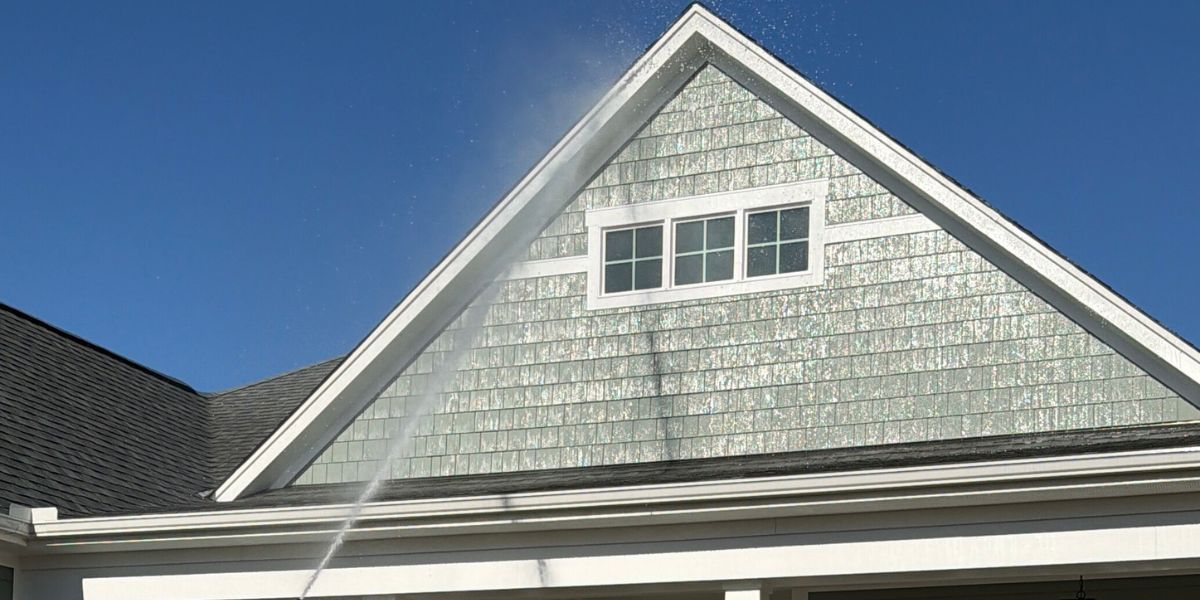
Why “Roof Pressure Cleaning” Can Be Misleading
When people search for roof pressure cleaning, most are picturing the same kind of blast a driveway or patio gets: a powerful stream of water stripping away grime in seconds. On concrete, that approach works fine. On a shingle roof, it’s a different story. High-pressure water can lift and crack shingles, drive water underneath the roofing material, and strip away the granules that protect shingles from UV damage. That’s why reputable roofing and cleaning professionals steer away from true high-pressure roof pressure cleaning. Instead, the industry standard is soft washing: low-pressure water combined with a specialized cleaning solution that kills algae, moss, and mildew at the root without ever putting mechanical stress on the shingles. The results look the same: a clean, streak-free roof, but the roof itself isn’t put at risk in the process.What Professional Roof Cleaning Actually Involves
Professional roof cleaning starts with an inspection, not a hose. A trained technician checks your roof type, shingle condition, and the extent of algae or moss growth before deciding on an approach. Asphalt shingles, metal roofing, and tile all respond differently to cleaning solutions, so a one-size-fits-all method is usually a red flag. From there, the technician applies an eco-friendly cleaning solution formulated to break down organic growth, lets it dwell long enough to work, and rinses with low-pressure water. The algae and moss lift away without scrubbing or scraping, which matters because physical abrasion is another common way inexperienced crews damage shingles. A thorough job also includes protecting landscaping and gutters from runoff during the rinse.Roof Washing Services vs. A Full Exterior Package
Some homeowners bundle roof washing services with a broader exterior cleaning, and there’s a good reason for that. Algae and mildew rarely stay confined to the roofline; they often streak down onto siding and gutters too, especially on the shaded side of a house. Handling the roof and the rest of the exterior in one visit means consistent results across the whole property instead of a roof that looks fresh next to siding that still looks dingy. That said, roof washing services can absolutely stand alone if that’s the only area showing buildup. A good company will assess your property and recommend only what’s actually needed, rather than upselling a full package when a roof-only clean would do the job.What to Ask Before Booking Roof Pressure Cleaning
If you’re comparing options for roof cleaning near me, a few questions separate the companies worth hiring from the ones to skip. Ask directly whether they use soft washing or high-pressure equipment on roofs. If the answer is high pressure with no mention of a specialized low-pressure process, that’s worth pausing on. Ask about the cleaning solution too, since a rushed or diluted mix might clean less thoroughly and let algae return within months. It’s also worth asking about guarantees. A company confident in its process should be willing to stand behind the results for more than a few weeks, since algae regrowth on a poorly cleaned roof often shows up faster than homeowners expect. Licensing and insurance matter here as well, given that roof work always carries some fall risk for the crew involved. Reviews are worth a close look too, not just the star rating but the details people mention. Comments about careful cleanup, respect for landscaping, and results that held up months later say more about a company’s actual process than a five-star average on its own. A pattern of vague or generic reviews, on the other hand, is often a sign the company hasn’t been around long enough to build a real track record.Protecting Your Investment After a Clean Roof
Once you’ve found a trustworthy option for roof cleaning near me and gotten the work done, a little maintenance keeps it that way longer. Trimming back overhanging branches reduces the shade and debris that feed algae growth, and keeping gutters clear prevents water from backing up under shingles. Some homeowners also opt for a zinc or copper strip installed near the roof ridge, which releases trace minerals during rain that slow algae regrowth over time. Scheduling a follow-up inspection or light cleaning every one to two years, rather than waiting until streaks are obvious again, tends to keep both the roof’s appearance and its lifespan in better shape. Catching light growth early is always easier and cheaper than dealing with years of buildup. It’s also worth keeping an eye on humid, shaded sections of the roof between cleanings, since those areas typically show regrowth first. A quick visual check every few months, especially after a rainy stretch, can catch early streaking before it spreads across the whole roofline.Conclusion
A streaked, algae-covered roof isn’t just a cosmetic issue; left alone long enough, it can shorten the life of your shingles and lead to costly repairs down the road. The key is making sure whoever cleans it understands the difference between blasting it with pressure and treating it the right way. Southern Coast Pressure Washing has built its reputation across the Myrtle Beach area on exactly that kind of careful, soft-wash approach, backed by a 4-year roof cleaning warranty and a 100% satisfaction guarantee. If your roof is showing streaks, reach out for a free, no-obligation quote and see what a properly cleaned roof actually looks like.Frequently Asked Questions
Is roof pressure cleaning safe for shingles?
True high-pressure cleaning can damage shingles by lifting them or stripping protective granules, which is why most professionals use a low-pressure soft-wash method instead. It’s worth confirming which approach a company uses before booking.
What does professional roof cleaning cost?
Pricing depends on roof size, pitch, and how much algae or moss buildup has accumulated. Most companies offer a free on-site estimate since photos alone don’t always capture the full extent of growth.
What are roof washing services supposed to include?
A thorough service includes an inspection, an eco-friendly cleaning solution applied and left to dwell, a low-pressure rinse, and care taken to protect landscaping and gutters from runoff. Some companies also offer a warranty on the results.
How often should I book roof cleaning near me?
Most homes in humid coastal climates benefit from a cleaning every one to two years, though shaded roofs or ones with heavy tree cover may need it more frequently.
Can I pressure wash my own roof to save money?
It’s not recommended. A standard consumer pressure washer can easily damage shingles, and without the right cleaning solution, algae often returns within months even if the roof looks clean initially.
Will roof cleaning remove all the black streaks?
In most cases, yes. Those streaks are typically algae, and a proper soft-wash treatment breaks it down at the root rather than just removing the surface discoloration, which is why results tend to last longer.