
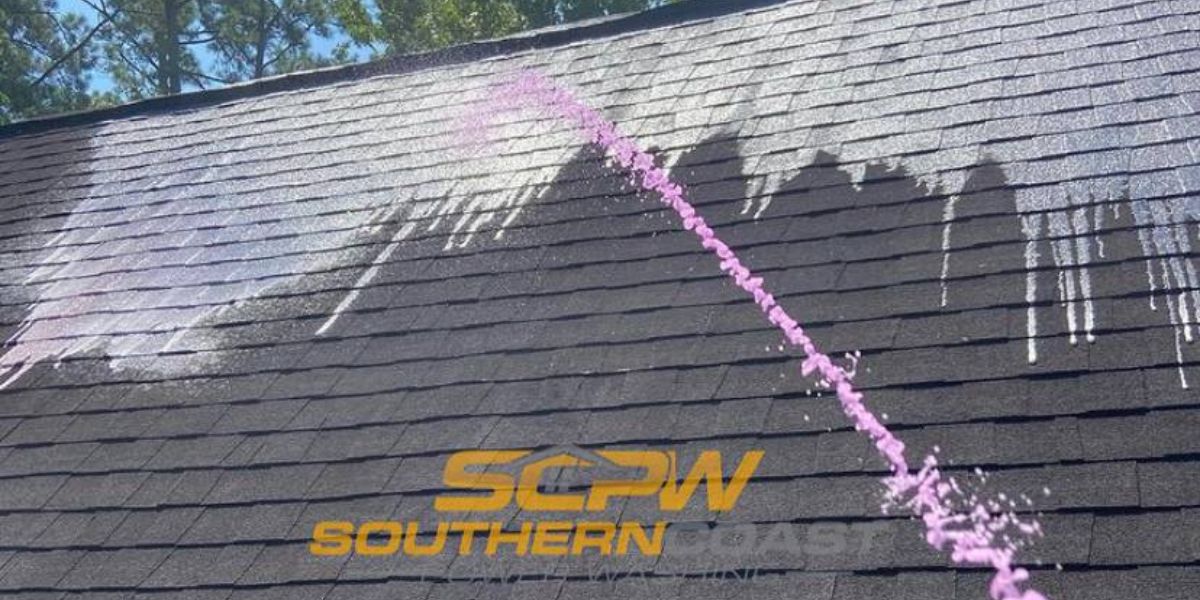
Look up at your roof right now. If you’re seeing dark streaks, patchy green moss, or a dull, grimy film across the shingles, you’re not imagining it that’s algae, and it spreads fast in warm, humid climates. Roof pressure cleaning is the fastest way to strip that buildup off before it eats into your shingles and drags down your curb appeal. Southern Coast Pressure Washing handles this kind of work every week, and the difference a proper cleaning makes is honestly a little startling the first time you see it.
Here’s the thing most homeowners don’t realize: a dirty roof isn’t just a cosmetic issue. Those streaks are living organisms feeding on the limestone filler in your shingles, and left alone, they shorten your roof’s lifespan considerably. This post walks through what roof pressure cleaning actually involves, why algae shows up in the first place, how to tell safe cleaning methods from risky ones, and what to look for when you’re hiring help.
What Roof Pressure Cleaning Actually Involves
Roof pressure cleaning isn’t one-size-fits-all, and that’s a good thing, because your roof material dictates the whole approach. Asphalt shingles, metal panels, tile, and cedar shake all react differently to water pressure, cleaning agents, and scrubbing. A crew that understands roof pressure cleaning will test a small section first, check the pitch and condition of the roof, and choose a method that lifts the grime without loosening granules or cracking tiles.
The process typically starts with a rinse to clear loose debris, leaves, twigs, and dirt, followed by an application of a cleaning solution designed to break down algae, moss, and lichen at the root. Only after that does any pressure come into play, and even then it’s usually a controlled, low-pressure application rather than a blast that could strip shingle granules. The goal is a roof that looks new again without a single tile disturbed in the process.
Why Algae, Moss, and Black Streaks Keep Coming Back
If you live anywhere near the coast, you already know humidity is relentless. That moisture, combined with shade from trees and morning dew that never quite dries off, creates the perfect environment for Gloeocapsa magma, the blue-green algae responsible for those black streaks on north-facing roof slopes. Moss tends to move in wherever algae has already softened the surface, packing itself into the granule layer and holding moisture against the shingle even longer.
This is where roof algae removal becomes more than a cosmetic fix. Once moss roots into a shingle, it lifts the edges and creates channels for water to seep underneath, which is exactly the kind of slow damage that turns into a leak nobody notices until it’s a ceiling stain. Routine roof algae removal breaks that cycle early, before moss has a chance to anchor itself and before algae spreads across the whole slope.
Soft Washing vs. High-Pressure Cleaning: What’s Actually Safe
This is the part where a lot of DIY attempts go wrong. Standard pressure washers can hit surfaces at 3,000 PSI or more, and asphalt shingles were never built to handle that kind of direct force. Blast a roof with high pressure, and you risk stripping the protective granules right off, which exposes the underlying material to UV damage and shortens the roof’s life instead of extending it.
Soft washing solves this by relying on specialized low-pressure equipment paired with an algaecide solution that does the actual cleaning work. The chemical breaks down organic growth at a cellular level, and a gentle rinse, often under 500 PSI, carries it away. It’s slower than blasting a roof with a pressure wand, but it’s the method that shingle manufacturers and roofing associations actually recommend, because it gets results without voiding your roof warranty.
Choosing the Right Roof Washing Company
Not every roof washing company approaches the job the same way, and the difference shows up fast if you pick the wrong one. Some outfits still show up with standard pressure washing equipment meant for driveways and siding, then apply it straight to shingles a shortcut that can cost you thousands in premature roof replacement. A reputable roof washing company will walk you through their method before they ever climb a ladder, explain what solution they’re using, and carry insurance that covers roof work specifically.
Working with an established roof washing company also means fewer surprises on the invoice, since experienced crews price the job accurately after seeing the roof rather than guessing over the phone. It also helps to ask how they protect landscaping and gutters during the process, since runoff from roof cleaning solutions can affect plants below if it isn’t rinsed and managed properly. A company that takes the time to tarp your bushes and flush your gutters afterward is telling you something about how carefully they’ll treat the roof itself.
What to Expect From a Professional Roof Pressure Cleaning
Booking professional roof cleaning services usually starts with a walk-around inspection, sometimes from the ground with binoculars or a drone, to check for loose shingles, exposed nails, or soft spots before anyone applies pressure or chemicals. From there, most jobs take a few hours depending on roof size and how heavy the algae buildup has gotten.
Expect the crew to pre-treat the whole roof, let the solution sit long enough to break down organic growth, then rinse everything down along with the gutters, downspouts, and any siding that caught overspray. Good professional roof cleaning services also include a quick post-job walkthrough so you can see the results and flag anything you’re not happy with before the crew packs up. Pricing generally comes down to square footage, roof pitch, and how long it’s been since the last cleaning. A roof that’s gone five years without attention takes more time and product than one cleaned on a regular schedule.
Conclusion
A clean roof does more than boost curb appeal; it protects the shingles underneath from years of slow, hidden damage that’s expensive to reverse. Whether you’re dealing with your first sign of black streaks or you’ve been putting off a cleaning for a while, getting ahead of algae and moss now saves you a much bigger repair bill later. If you’re ready to have it handled the right way, Southern Coast Pressure Washing uses soft-wash methods built specifically for roofs, so your shingles come out clean without the risk that comes with a standard pressure washer.
Frequently Asked Questions
How often should I schedule roof pressure cleaning?
Most homes in humid, coastal areas benefit from a cleaning every 1 to 2 years, though shaded roofs with heavy tree cover may need it sooner. Regular cleaning keeps algae from ever getting a strong foothold, which makes each future cleaning faster and cheaper.
Will roof cleaning damage my shingles?
Not when it’s done correctly. Soft washing at low pressure with the right cleaning solution lifts algae and moss without stripping granules, which is why it’s the method most roofing manufacturers recommend over high-pressure blasting.
What's the difference between roof algae removal and just rinsing the roof with water?
A plain water rinse only clears loose dirt and debris; it doesn’t kill the algae organisms living on the shingle surface. Roof algae removal uses a targeted solution that breaks down the organism at its root, so the black streaks don’t just fade; they stay gone much longer.
Can I pressure wash my own roof instead of hiring someone?
You can, but it’s risky without the right equipment and know-how. Standard consumer pressure washers are often too strong for shingles, and working on a wet, sloped roof carries real safety risk, which is why most homeowners leave this one to a trained crew.
How do I know if a roof washing company is trustworthy?
Look for insurance that specifically covers roof work, a clear explanation of their cleaning method before they start, and willingness to answer questions about the products they use. A company that rushes past these details is worth a second look before you book.
What causes those black streaks on my roof in the first place?
Those streaks are typically Gloeocapsa magma, a blue-green algae that feeds on the limestone in asphalt shingles and thrives in humid, shaded conditions. It spreads gradually across north-facing slopes, which is why it’s often more noticeable on one side of the roof than the other.